
Did you know that 99% of the time Vietnamese will not greet each other with “Xin chào!” like most of the textbooks or tutor videos you find online for learning Vietnamese? Why? Because we greet each other based on occupations, ages, genders, social relationships. Therefore, it is super complex just to learn how to say “Hi” in Vietnam.
Did you know that modern Vietnam nowadays used to be lands of three different ancient kingdoms?
If you are keen on learning a bit more about those topics, this article is for you.
Super short history of Vietnam
Ancient times and the Chinese domination
Vietnam’s earliest recorded history dates back to around 2879 BCE with the establishment of the Hung Vuong empire. After the Hung Vuong dynasty, the Au Lac dynasty was founded. Legend says that the only daughter of Au Lac fell in love with the Prince of the Han dynasty (China mainland nowadays). The princess gave the military secret to her husband which led to the fall of Au Co, and it officially became a province of the Han dynasty. This land was under the domination of many ancient Chinese dynasties until 938. Ngo Quyen defeated the rulers of the Tang dynasty from China, claimed independence, and became the first king after thousands of years under Chinese domination.
Many Vietnamese dynasties successfully stabilized Dai Viet (the name of Vietnam for almost 8 centuries) and developed it further to become a stronger and richer kingdom.
Champa Kingdom and “Push to the South” strategy of Dai Viet
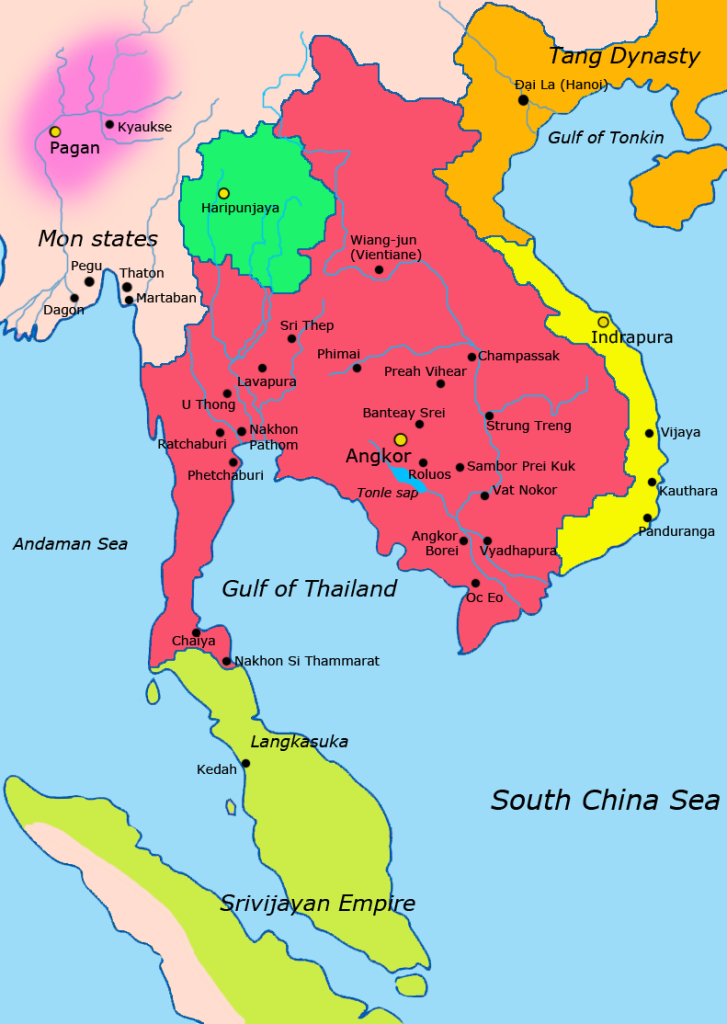
In the meanwhile, Champa, the kingdom in the South, was influenced by Hinduism and later Buddhism. It was a rich kingdom and entered its golden age from the 7th to the 10th centuries. During this time, the Cham controlled the trade in spices and silk between China, India, the Indonesian islands, and the Abbasid empire in Baghdad (Wikipedia). Because of its important location, Champa was targeted by many rulers including the ones from Dai Viet.
Until the 15th century, after many dynasties, the map of Dai Viet, the name of Vietnam at that time, was presented in the pictures below. You can see the middle part to the south along the coast was the Champa kingdom, and the part of the highland nowadays together with the Mekong delta in the Southeast region belonged to the Khmer empire (Cambodia, Laos and part of Thailand nowadays).
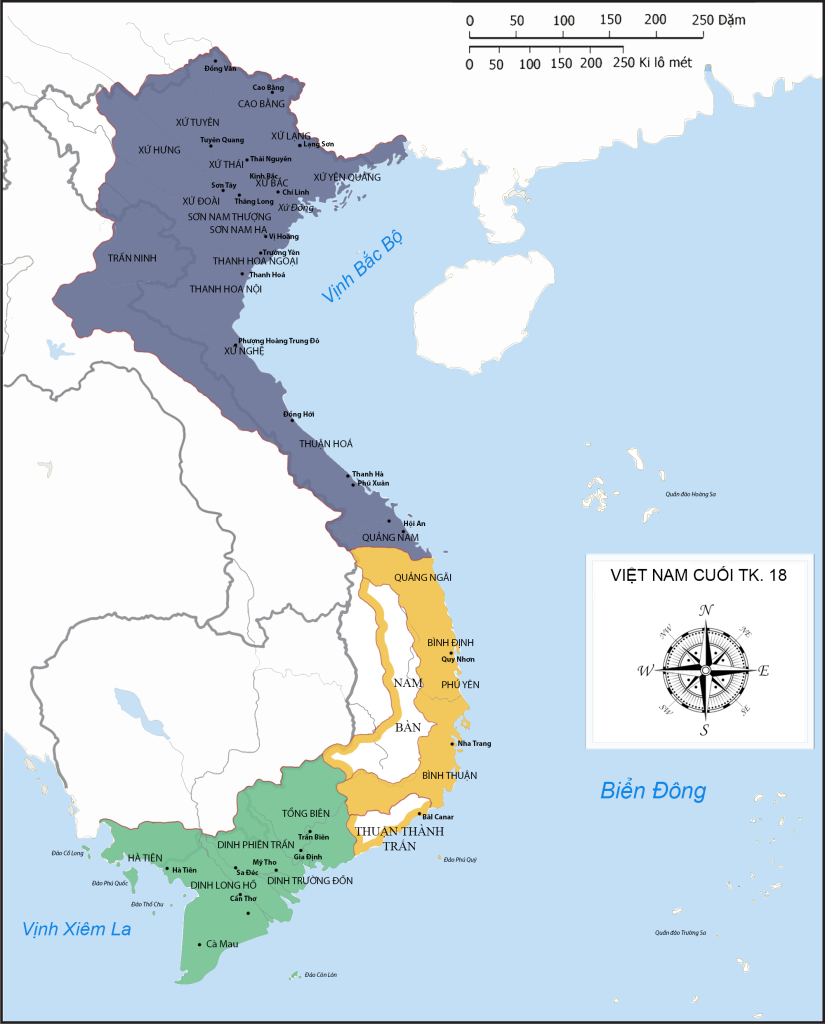
Many invasions took place from the 15th century until the 19th century when the French reached this peninsula. Before the French took control of the whole Indochina, Dai Viet kings successfully took over Champa and the big portion of the Khmer empire which had lost its power long ago and the Mekong delta.
French colonization
Later the French invaded and established French Indochina. It comprised Cambodia, Laos (from 1899), the Chinese territory of Guangzhouwan (from 1898 until 1945), and the Vietnamese regions of Tonkin in the north, Annam in the center, and Cochin China in the south (Wikipedia).
The French also allocated the occupation of lands within three countries: Vietnam, Laos, and Cambodia. Phu Quoc island, for example, used to be part of Cambodia, but was given to the Vietnamese under the French allocation program.
For more than one century, the French implemented colonization in Indochina, significantly influencing the economy and culture.
Independence and Vietnam War
During World War II, Japan invaded Indochina in 1940, keeping the Vichy French colonial administration in place as a puppet. Marxism and communism were slowly introduced into Vietnam. In 1941, Hồ Chí Minh, the leader of the Vietnamese revolution, arrived in northern Vietnam to form the Việt Minh Front and led the military to win independence in 1945 (Wikipedia). He proclaimed the Democratic Republic of Vietnam.
Followed by that was the war with the French from 1945 to 1954. After defeating the French in 1954, the Geneva agreement was signed. The struggle for independence culminated in the Vietnam War, which further shaped the nation’s identity. The country was divided into two parts. The north, under the communism and Chinese traditions, contrasted with the more Westernized south supported by the USA. The 17th parallel was chosen as the border. The country was united in 1975 with the victory of the North.
How does culture reflect history?
The North of Vietnam has more Chinese influence, presenting in brown pagodas and the religion of Eastern Asian Buddhism (Mahayana). Confucianism and Taoism were long introduced and taught for generations. That reflects in the conservation of Northern Vietnam when it comes to tradition. The relationship between family members and other people as well as how to behave in society were strictly defined and expected to follow.
Remember that I mentioned at the beginning of the articles about how to greet each other in Vietnam? The reason why we must greet each other based on so many factors such as occupation, age, gender, etc. is the result of Confucianism and Taoism. We need to have a hierarchy and to make sure that everybody respects each other, especially the older people.
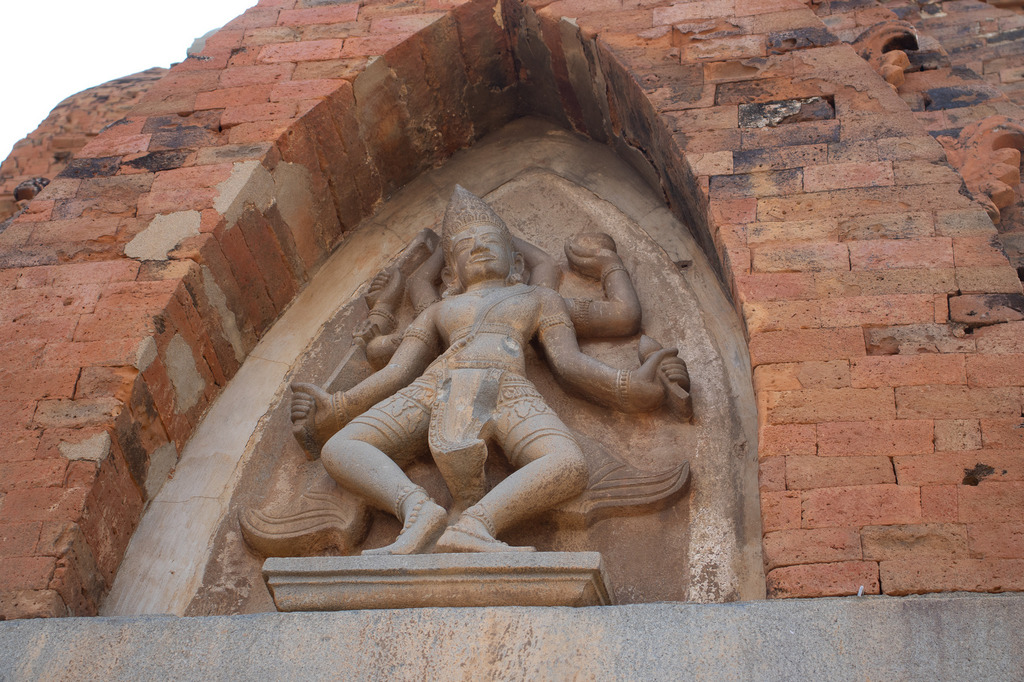
In the meanwhile, if you visit the cities and provinces from the middle of Vietnam to the South Coast, you will see more Hindu influence with the Cham temple, the ruins from the Champa Kingdom, the festivals of the Cham, and the beliefs, traditions. In the Mekong delta and areas bordered with Cambodia, the influence of the Khmer empire can also be seen. In those areas, the Chinese, Khmer, and Vietnamese inhabit and live together. The cultures, religions, and beliefs meet here and interfere with each other.
However, French colonization also has a significant influence on Vietnam today. In Vietnamese, there are many French borrowed words, and a lot of foods got inspiration from French food, such as the Vietnamese version of the baguette. The first art French academy in Hanoi was the place nurturing many talented modern Vietnamese artists. In Hanoi’s old quarter, you will see many French architectures: Hanoi Theater, French center in Trang Tien Street, the old houses with French windows in the quarter, etc. Believe it or not, I was once in Nice, France and some parts of Nice reminded me of the Old Quarter in Hanoi.
The invasion of the Westerners also brought the transformation of the Vietnamese language. Vietnamese people borrowed the traditional Chinese characters to depict the sound of the language. The writing was called Nom. However, the alphabet from the European language was easier to write and learn. From the beginning of the 20th century, modern Vietnamese was widely used and became the official writing for the national language.
The Vietnam War also intensified the difference between regions in Vietnam. The south, which is more influenced by the West, is considered to be more friendly and open.
Learning about history is the shortest way to understand the culture.
“A nation’s culture resides in the hearts and in the soul of its people” by Mahatma Gandhi.”
With a piece of information about Vietnam’s history and how it is reflected in the culture, you are equipped to have a meaningful journey through Vietnam. Understanding the rich historical background of the country will enrich your experience much more. When you look at the Champ temple, you will not just see a temple but a kingdom, which was wiped out centuries ago.
And, if you really want to learn how to greet people properly in the Vietnamese way, then good luck! It will take you a while.